![L7 Labs [DEV]](https://dev.l7labs.de/l7sitedev/web/app/uploads/2020/10/L7_final_blue_short.png)
Antimicrobial resistance ‘biggest human health threat, bar none’, says Australian research director ahead of three-year study in Fiji.
The emergence of antimicrobial resistance (AMR), including drug-resistant bacteria, or “superbugs”, pose far greater risks to human health than Covid-19, threatening to put modern medicine “back into the dark ages”, an Australian scientist has warned, ahead of a three-year study into drug-resistant bacteria in Fiji.
“If you thought Covid was bad, you don’t want anti-microbial resistance,” Dr Paul De Barro, biosecurity research director at Australia’s national science agency, the CSIRO, told The Guardian.
“I don’t think I’m exaggerating to say it’s the biggest human health threat, bar none. Covid is not anywhere near the potential impact of AMR.”
“We would go back into the dark ages of health.”
While AMR is an emerging public health threat across the globe, in the Pacific, where the risk of the problem is acute, drug-resistant bacteria could stretch the region’s fragile health systems beyond breaking point.
An article in the BMJ Global Health journal reported there was little official health data – and low levels of public knowledge – around antimicrobial resistance in the Pacific, and that high rates of infectious disease and antibiotic prescription were driving up risks.
“A challenge for Pacific island countries and territories is trying to curtail antimicrobial excess, without jeopardising antimicrobial access for those who need them,” the paper argued.
Fiji, despite a population of less than a million people, has one of the highest rates of bacterial infections in the world. The country also has high levels of tuberculosis in animals and humans, and its hospitals perform, on average, two diabetic amputations every day, all of which drives the use of antibiotics.
Across the archipelago nation, many antibiotics are used across both human and animal populations, increasing the risk of resistant bacteria developing.
Last month, Fiji’s government announced that 10 people had died from leptospirosis, a bacterial infection that affects both animals and humans, while thousands more were infected.
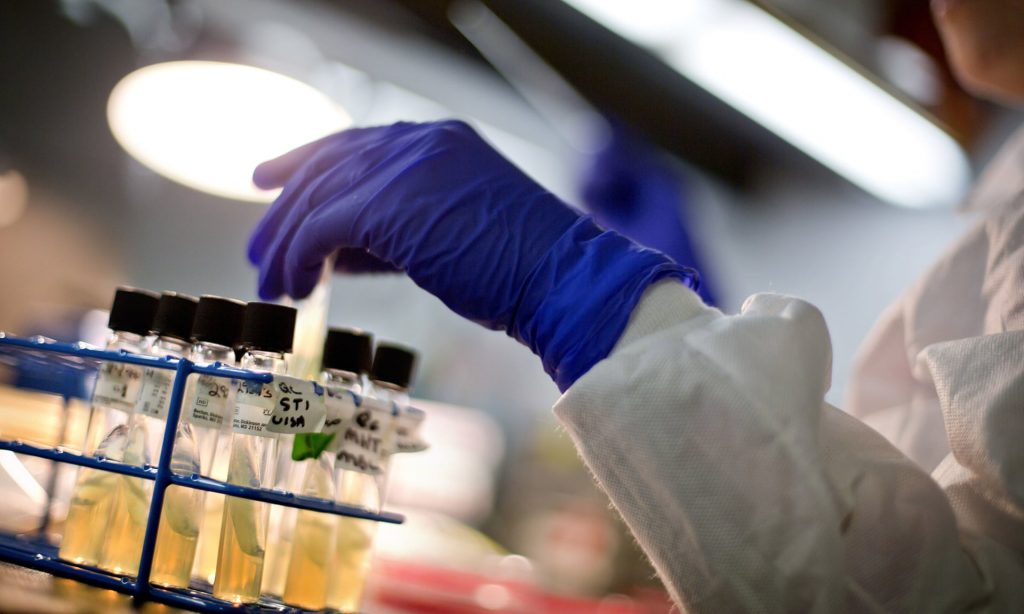
Australia’s CSIRO has begun a three-year study in Fiji, alongside the government of Fiji’s national antimicrobial resistance committee and universities across Australia and the Pacific, to identify the emergence of superbugs in Fiij, analysing data from hospital pathology labs, farms contaminated with pharmaceuticals, and in the general environment, seeking to identify AMR hotspots and emerging trends.
The global public health ramifications of the widespread emergency of drug-resistant bacteria are immense.
CSIRO research director for Health and Biosecurity Paul De Barro
“If you consider how antibiotics now play a role in virtually every part of our health system: simple things like scratches could kill you, childbirth could kill you, cancer treatment, major surgeries, diabetes, in the background in all of these, is often the use of antibiotics,” De Barro said.
“That will all become very very challenging, if you are doing it in an environment where the antibiotics you use no longer work.
“You will end of with massive pressure on the health system – exactly the sort of things you are seeing with Covid – think about intensive care units, hospital stays, access to medical treatment outside of the hospital system, the use of antibiotics in nursing, in treating pneumonia, all of these come into play.”
Social distancing can’t help with AMR: bacteria exist in food, water, and air, they are all around on everyday surfaces.
Dr Donald Wilson, associate dean at the Fiji National University’s College of Medicine, said the issue could not be ignored any longer “or there will be more people getting sick and we don’t have the right medicines to treat them”.
Already, antibiotic resistance is estimated to cause at least 700,000 deaths globally a year – though this is likely a severe underestimate. That figure has been projected to reach 10 million deaths annually without intervention.
Exacerbating that trend, the increased use of antibiotics to combat the Covid-19 pandemic will strengthen bacterial resistance and ultimately lead to more deaths during the crisis and beyond, the World Health Organization (WHO) has warned.
Three hundred and fifty million deaths could be caused by AMR by 2050, the WHO has estimated, while the economic cost is predicted to reach US$1.35tr over the next 10 years in the western Pacific region alone.
The longer the issue remains unaddressed, the greater the cost in money and human lives, Wilson said.
“For instance, we’ve identified people who have a multi-drug-resistant form of tuberculosis and need newer, stronger medication for a longer period of time and those stronger antibiotics are more expensive.”