![L7 Labs [DEV]](https://dev.l7labs.de/l7sitedev/web/app/uploads/2020/10/L7_final_blue_short.png)
Phages attach to bacteria cells and inject genomes into these cells in order to halt bacterial infections. They are very specific ‘predators’ that demonstrate powerful mechanisms to kill bacterial infections. The term ‘bacteriophage’ is derived from ‘bacteria’ and the Greek ‘phagein’ meaning ‘to devour’.
What are Bacteriophages?

Bacteriophage, known as Phage, is a virus that can be used as an alternative to antibiotics.
The Lytic Cycle of Bacteriophages
Step 1.
The Phage identifies the bacteria cell.
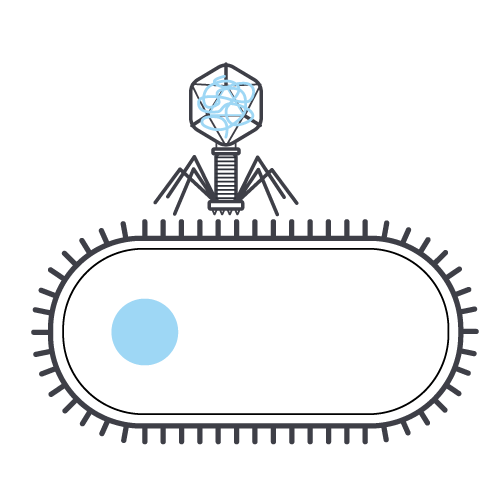
Step 2.
The Phage attaches to the bacteria cell.
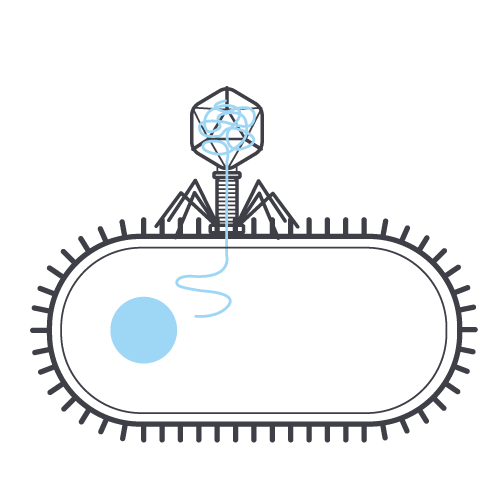
Step 3.
Phage DNA enters the bacteria cell.
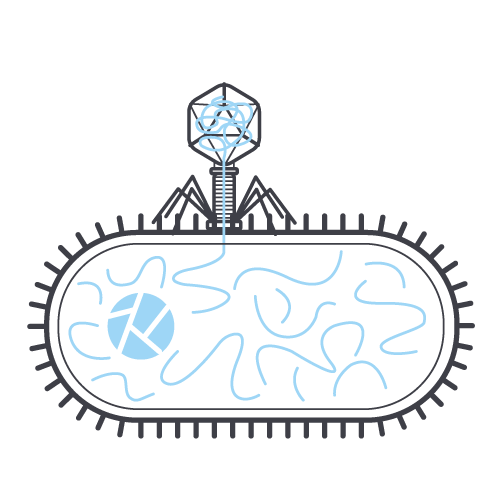
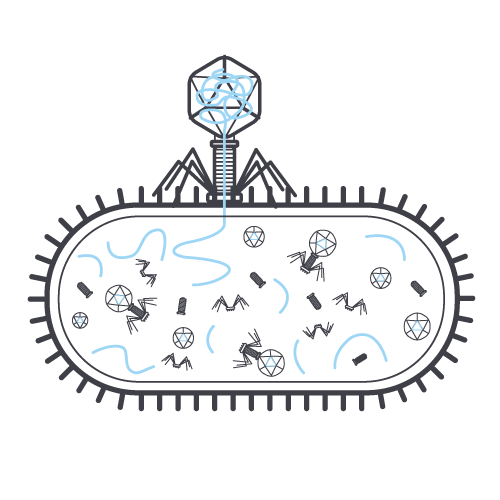
Step 4.
Phage DNA integrates into the bacteria DNA.
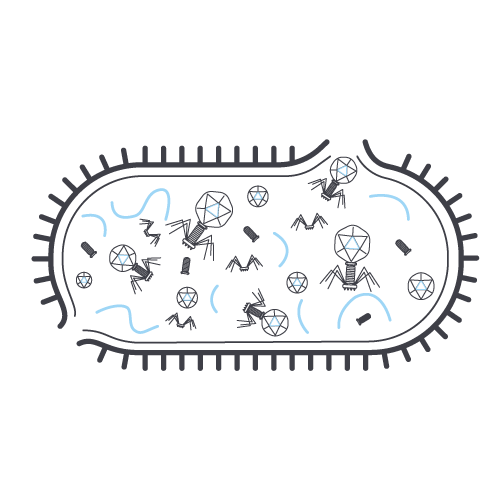
Step 5.
The Phage multiplies inside the bacteria cell.
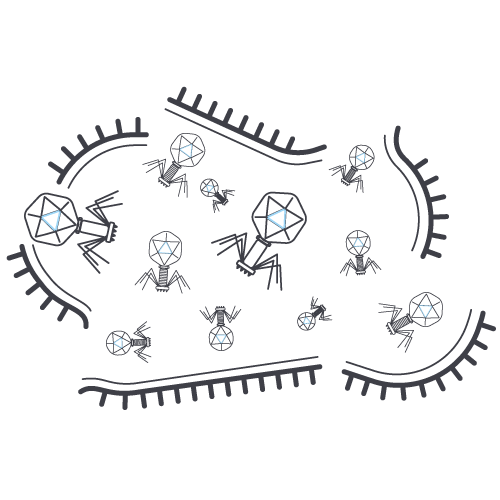
Step 6.
The bacteria cell is destroyed and new Phages are released.
Growing Resistance
The growing resistance of bacteria to the use of antibiotics is arguably the most significant problem that Phages can solve. Phage therapy is a solution to the imminent global problem of bacteria developing resistance to antibiotics. In recent years Phages have become a growing solution to treating bacterial infections in cases where bacteria have developed multi-drug resistance.
History of Phages
During the period between the world wars, Phage therapy was a leading medical tool used to treat bacterial infections. But the development of modern antibiotics in the 1940s, redirected research away from Phages towards the development of new and more potent antibiotics. However, following the current growing concern of ‘superbug’ infections that has led to antibiotic resistance, the use of Phage therapy has again gained interest from global health organisations and the scientific community.